The interface
is the device.
Baldur Series MEAs — engineered platforms where catalyst, ionomer, membrane, and gas-diffusion layer converge into a single integrated component.
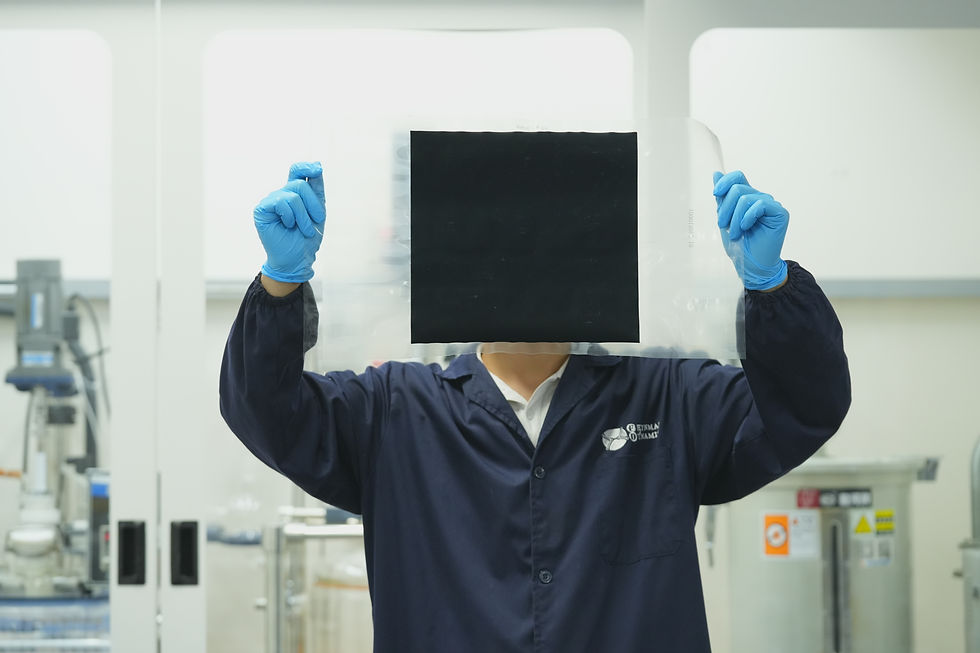
Catalyst-Coated Membrane
Catalyst on the membrane.
Three properties decide whether an electrochemical cell scales: where the catalyst sits, how much of it sits there, and how precisely the active area is bounded.
The catalyst-coated membrane (CCM) architecture places the active catalyst layer in direct contact with the ion-conducting polymer membrane. This eliminates the ohmic contribution of the separator-electrode interface, halving internal resistance versus catalyst-coated substrate fabrications in equivalent operating regimes. Our CCM platform is configurable across chemistry (AEM or PEM), membrane format (self-supported, reinforced, crosslinked), catalyst composition, mass loading, and geometric definition of the active region.
01
Fully customizable membrane platform
Choose AEM or PEM chemistries in reinforced, self-supported, or crosslinked formats. Thickness, structure, and dimensions tailored to your system design.
02
Application-tuned catalyst formulation
Catalyst composition and mass loading optimized to your performance, durability, and cost targets.
03
Precision-defined active area
Catalyst-coated regions engineered with tight geometric control, ensuring uniform current distribution and reproducible cell-to-cell performance.

Ultrasonic spray coating
Catalyst inks atomized through an ultrasonic nozzle for precise deposition control. Custom geometries, small-batch flexibility, and rapid iteration for prototyping. The right tool for catalyst screening and process development.

Roll-to-roll continuous coating
Continuous web coating of catalyst layers onto rolled membrane or substrate. The throughput pathway for production-scale MEA manufacture, with in-line QC ensuring batch-to-batch consistency.
Catalyst-Coated Substrate
Catalyst grown directly
on the substrate.
Engineered for next-gen electrochemistry
Built for the three-phase interface.
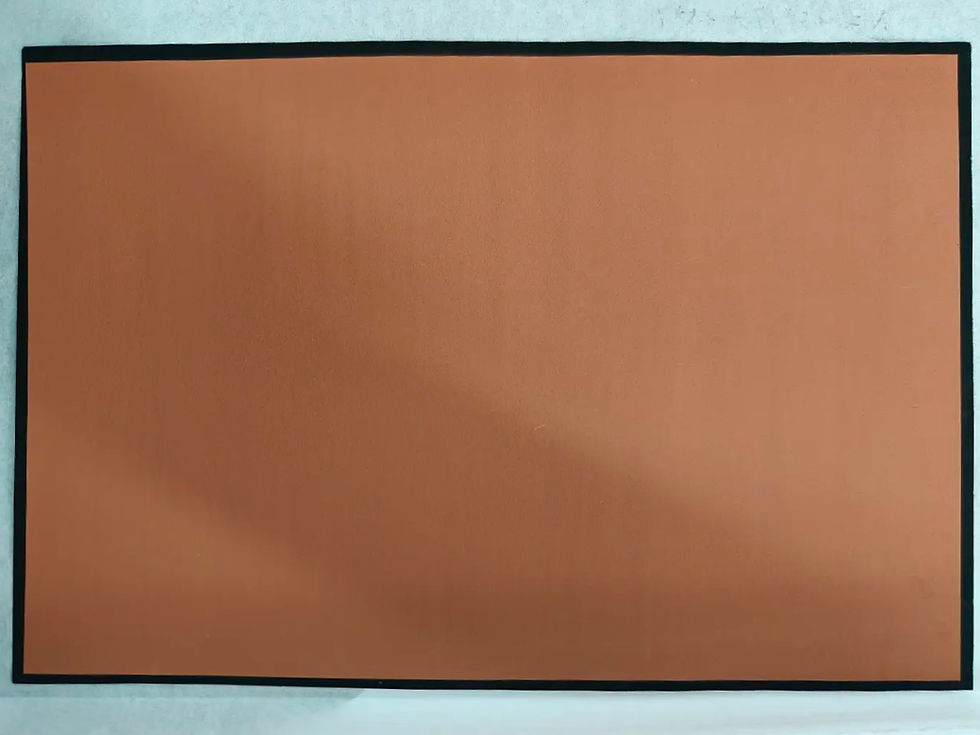
Feynman Dynamics offers a high-performance series of gas diffusion electrodes (GDEs) purpose-built for water electrolysis, CO₂ electroreduction, and a wide range of electrochemical applications. Our Ni-based catalysts are grown directly on nickel foam substrates, delivering robust adhesion, superior electrical conductivity, and optimized gas transport across the three-phase interface.
Uniform Ni-based catalyst layer · precision-deposited
Integrated nickel foam substrate · high conductivity
Scalable manufacturing with rigorous QC
Uniform Ni-based catalyst layer
precision-deposited for consistent activity and reproducible cell performance.
Integrated nickel foam substrate
combines outstanding conductivity with the mechanical robustness needed for demanding stack environments.
Scalable manufacturing with rigorous QC
strict process control ensures batch-to-batch consistency from lab-scale samples to commercial volumes.
Size
CONSTRUCTION
Self-supported · 100% resin composition
5 cm x 5 cm
10 cm x 10 cm
30 cm x 30 cm
80 cm x 110 cm
AEM Water Electrolysis
Applications
CONSTRUCTION
Self-supported · 100% resin composition
CONSTRUCTION
Self-supported · 100% resin composition
Type
Catalyst
Description
MN100
MoNi alloy
Molybdenum nickel (MoNi) Alloy GDE made from nickel mesh
NF100
FeCoNi LDH
Iron cobalt nickel hydroxide (LDH) co-deposited GDE made from nickel mesh
Sizes available
Application